
When your business premises have been damaged by fire, flood, storm or a break-in, every week without a settlement costs you money. Rent still has to be paid, staff still need wages and customers will not wait forever. If you are a business owner or landlord waiting on a commercial property insurance claim, you are probably wondering why it is taking so long and whether there is anything you can do about it. The good news is that there usually is. Most delays have predictable causes, and many of them can be avoided or reduced with a bit of organisation and the right support.
This guide explains why commercial claims tend to stall, the practical steps you can take to keep yours moving, and how an independent loss assessor can help you reach a fair settlement sooner.
Why Commercial Claims Take Longer Than Home Claims
Commercial claims are rarely simple. A home claim might involve a kitchen ceiling and some carpets. A business claim can involve the building, fixtures and fittings, stock, machinery, tenants, loss of rent and lost trading profit, all at once. Each part may be handled by a different specialist on the insurer’s side, and each needs its own evidence.
The insurer will normally appoint a loss adjuster to investigate. It helps to remember that loss adjusters are appointed and paid by the insurer. They should be fair, but their job is to assess the claim on the insurer’s behalf, and they are often juggling many cases at once. If you want to understand the difference in more detail, our guide on loss assessors versus loss adjusters sets it out clearly.
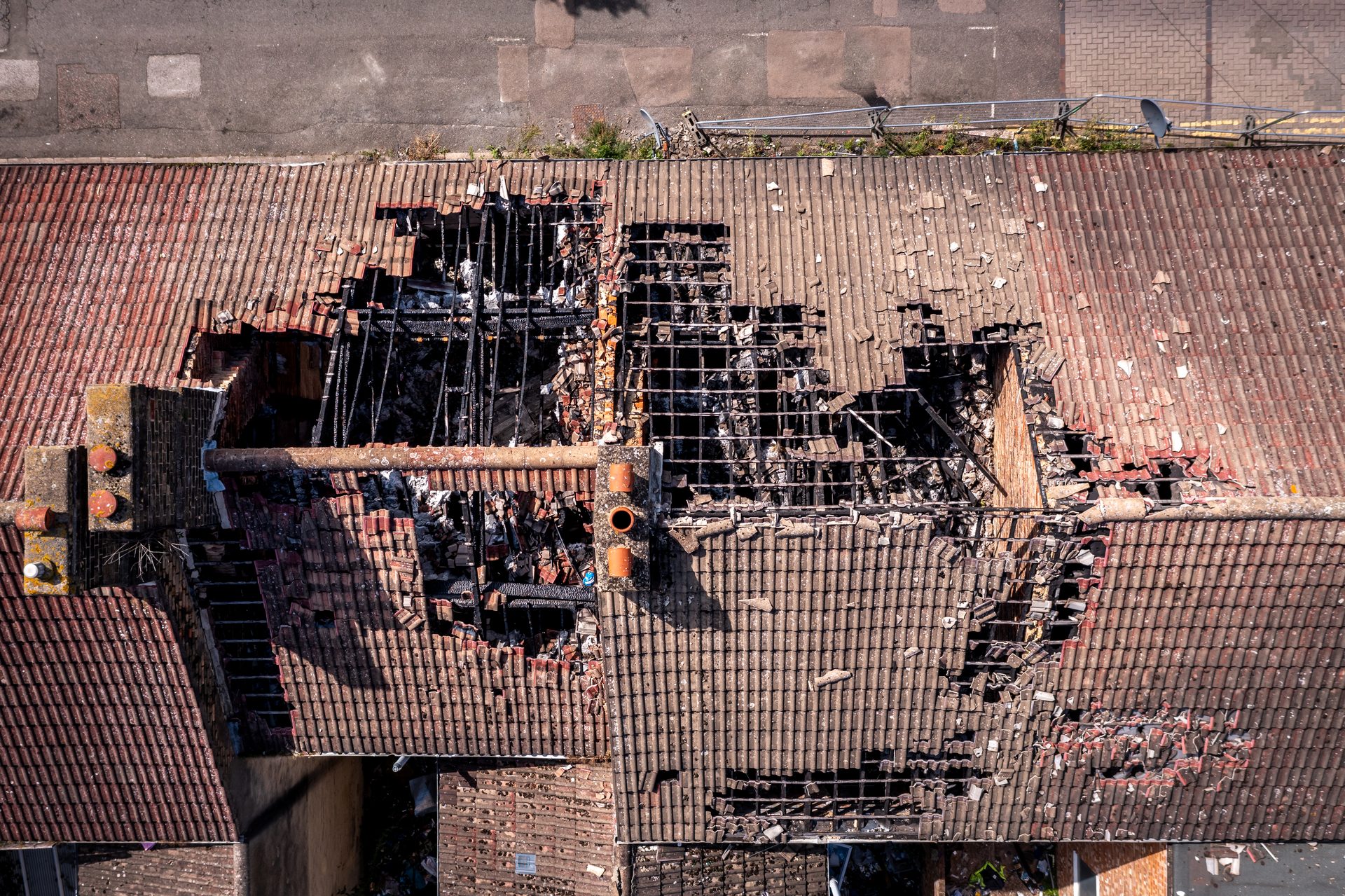
Common Reasons a Commercial Property Insurance Claim Stalls
Knowing where the hold-ups usually come from makes it much easier to get ahead of them. These are the issues we see most often.
Disputes about the cause of damage
Before an insurer pays anything, it needs to be satisfied that the damage was caused by something the policy covers. If there is any doubt, for example whether water came from a sudden escape or a long-term leak, or whether storm damage was really caused by wear and tear, the insurer may want reports from specialists. That can add weeks. Clear evidence of what happened, gathered early, helps to settle these questions quickly.
Underinsurance and the average clause
Many commercial policies include an average clause. If your sum insured is lower than the true rebuild cost or value of what is covered, the insurer may reduce your payout in proportion. For example, if you are insured for 75% of the true value, you may only receive around 75% of your loss, even on a partial claim. When an adjuster suspects underinsurance, they will often carry out a detailed valuation before agreeing anything, which slows things down and can lead to an unwelcome surprise.
Missing or incomplete documents
Insurers need proof of what was lost and what it was worth. Missing invoices, stock records, asset registers, leases or maintenance records are one of the most common reasons claims sit in a queue. Every request for “just one more document” can add another week or two.
Business interruption calculations
If your policy includes business interruption cover, the loss of income part of a commercial property insurance claim is often the most complex. The insurer will want to compare your expected trading with what actually happened, which means looking at past accounts, management figures, seasonal patterns and any extra costs you have taken on to keep trading. Without organised financial records, these calculations can drag on for months.
Slow contractor quotes
The insurer cannot agree the cost of repairs until it has a credible scope of works and prices. Good contractors are busy, especially after storms or floods that affect a whole area. If quotes are slow to arrive, or differ wildly from what the adjuster expects, the claim stalls.
Communication gaps
Emails go to the wrong person, a broker is waiting on the adjuster, the adjuster is waiting on you, and nobody is quite sure who has the next action. On larger claims involving landlords, tenants and managing agents, these gaps are very common and surprisingly costly.
Practical Steps to Speed Up Your Claim
You cannot control everything, but you can control a lot. Here are the steps that make the biggest difference.
1. Notify your insurer promptly
Most policies require you to report a loss as soon as reasonably possible. Late notification gives the insurer a reason to ask extra questions and, in some cases, to challenge the claim. Call your insurer or broker straight away, get a claim reference number and make a note of who you spoke to and when.
2. Take reasonable steps to limit further damage
Your policy will expect you to mitigate your loss. That might mean turning off the water, boarding up broken windows, sheeting a damaged roof, moving undamaged stock to safety or arranging drying equipment. Keep receipts for anything you spend, as reasonable emergency costs are often recoverable. Doing this early protects your claim and shows the insurer you have acted responsibly.
3. Document everything before it is cleared
Take photos and videos of all the damage, from wide shots of each room to close-ups of individual items, serial numbers and stock. Do this before anything is thrown away or repaired, where it is safe to do so. If items must be disposed of for health and safety reasons, photograph them first and, if possible, keep samples. Good evidence is one of the quickest ways to avoid arguments about cause and value. Our article on how damage assessment affects payouts explains why this matters so much.
4. Get your policy schedule and sums insured to hand
Find your full policy wording, your schedule and any endorsements. Check the sums insured for buildings, contents, stock and business interruption, the indemnity period, any excesses and any conditions such as security or maintenance requirements. Knowing what you are covered for helps you present the claim properly and spot potential underinsurance issues before they become a sticking point.
5. Organise your financial records for business interruption
If you are claiming for lost income or loss of rent, pull together the last two to three years of accounts, recent management accounts, VAT returns, sales reports, rent schedules and tenancy agreements. Keep a running record of any extra costs you are incurring to keep the business going, such as temporary premises, equipment hire or overtime. The faster the insurer can see a clear picture, the faster it can agree figures.
6. Ask about interim payments
You do not always have to wait until the end of the claim to receive money. On larger claims, insurers can make interim payments once part of the loss has been accepted. These can cover emergency work, stock replacement or early business interruption losses and can be the difference between a business surviving a loss or not. Ask the adjuster directly whether an interim payment is possible and what evidence they need to release one.
7. Agree a scope of works early
Rather than waiting for each side to produce its own repair estimate, push for an early meeting to agree the scope of works. Once everyone agrees what needs doing, getting prices becomes much simpler. Get quotes from reputable contractors as soon as you can, and make sure they are itemised so the adjuster can compare them easily.
8. Appoint a single point of contact
Choose one person to manage communication on your side, whether that is you, a director, your managing agent or a professional representative. Make sure the insurer, adjuster, broker and contractors all know who that person is. This stops messages getting lost and avoids mixed messages that can slow decisions.
9. Keep a claim log
Keep a simple log of every phone call, email, site visit and document you send, with dates and names. This makes it easy to see where things are stuck and gives you a clear record if you need to raise a complaint later.
10. Escalate politely when things stall
If your commercial property insurance claim is going nowhere, start with a courteous email to the adjuster asking for a clear update and a timescale for the next step. If that does not help, ask your broker to chase the insurer, then ask to speak to a claims manager. Keep it calm and factual. Polite persistence is usually far more effective than frustration.
11. Know your rights if you are a small business
If you are unhappy with how your claim is being handled, you can make a formal complaint to your insurer. Insurers generally have up to eight weeks to give you a final response. If you are still not satisfied, eligible micro-enterprises and small businesses, along with some charities and trusts, can refer the complaint to the Financial Ombudsman Service. The Ombudsman is free to use and independent. There are eligibility criteria based on business size and turnover, and time limits apply, so check the Ombudsman’s website or ask for advice if you are unsure.
Tips for Landlords and Managing Agents
Landlords face some extra challenges. You may be dealing with tenants who are unable to trade, service charge questions and loss of rent at the same time as the repairs. A few things help to keep a landlord’s claim moving:
- Check whether your policy includes loss of rent cover and for how long.
- Have your leases, rent schedules and any rent suspension clauses ready to share.
- Keep tenants informed, but agree who speaks to the insurer so messages are not mixed.
- Make sure any contents or fit-out belonging to tenants is claimed under the correct policy.
- Review your sums insured regularly so average is not applied to future claims.
Getting your cover right in the first place also makes any future claim far smoother. Our guide for commercial landlords covers what to think about when setting up or reviewing your policy.
How a Loss Assessor Can Speed Up Your Claim
A loss assessor works for you, the policyholder, not the insurer. Their job is to prepare, present and negotiate your claim so that you receive a fair settlement without having to manage every detail yourself. For businesses and landlords, this can make a big difference to both the speed and the outcome of a claim.
Here is how a loss assessor can help keep a commercial property insurance claim moving:
- Getting the claim right first time. A well prepared claim with clear evidence, valuations and costings leaves fewer questions for the adjuster to ask.
- Handling the paperwork. They know what insurers need and can gather, organise and submit it in one go rather than in drip-fed batches.
- Agreeing the scope of works. They can meet the adjuster on site, agree what needs repairing and challenge anything that has been missed.
- Supporting business interruption claims. They can help pull together the figures, often working alongside your accountant, so the calculation is clear and supported.
- Pushing for interim payments. They can request interim payments at the right stages to help you keep trading.
- Acting as your single point of contact. They chase the insurer, adjuster and contractors, keep a full record and tell you where things stand.
- Negotiating on your behalf. If the adjuster’s offer seems low, they can challenge it with evidence and argue your case.
What about fees?
Loss assessors usually charge a fee that is agreed upfront, often a percentage of the final settlement. It is important to understand exactly what you are paying and what is included, so always ask for the fee in writing before you sign anything. A good loss assessor will be happy to explain how they work, answer your questions and give you an honest view of whether they can add value to your claim.
Quick Checklist: Keeping Your Claim on Track
If you only remember a few things from this guide, make it these:
- Report the loss quickly and get a claim reference.
- Take reasonable steps to stop further damage and keep receipts.
- Photograph and video everything before it is moved or repaired.
- Find your policy schedule, wording and sums insured.
- Organise your accounts and rent records for any loss of income claim.
- Ask about interim payments early.
- Agree a scope of works and get itemised quotes.
- Keep one point of contact and a dated log of everything.
- Escalate politely and know when to involve the Financial Ombudsman Service.
Speak to Sabre Assessing About Your Commercial Claim
A delayed settlement can put real pressure on a business, but you do not have to face it alone. Sabre Assessing is an independent firm of loss assessors based at North Harbour in Portsmouth. We act only for policyholders, never insurers, and we help businesses, landlords and managing agents with fire, flood, storm, escape of water, subsidence, impact and burglary claims. Sabre Assessing Ltd is authorised and regulated by the Financial Conduct Authority.
Whether you have just suffered a loss or your commercial property insurance claim has already been dragging on for months, we are happy to have an informal chat about where things stand and whether we can help. If you would like to talk it through, get in touch with our team, or find out more about Sabre Assessing.
Share This Story, Choose Your Platform!
About Sabre Assessing